

The instinct most companies follow goes something like this: build the product, prove the model, then add a brand on top once there's budget for it. Logo refresh. New website. Maybe a brand guide.
They think that a brand is simply additive to their company if it is good, and subtractive if it is bad.
Instead, we’ve seen how brands work as a compounding, multiplicative force that affects every effort you make and dollar you spend. (PS. We built a simple calculator where you can see the math of how your brand might effect your bottom line. Here is the link to save it for later.)
The core point is that your brand doesn't sit on top of your business. It weaves itself throughout it. By the time you're hiring, pricing deals, running campaigns, and pushing reps into calls — your brand has had an effect on every effort you make and dollar you spend so far.
Below are four vectors where we’ve seen the brand multiplier effect does its most significant work.
- Attracting talent through your brand
- Retaining talent through your brand
- Justifying your price points through your brand
- Increasing marketing and sales effectiveness through your brand
Multiplier 1: Talent Attraction
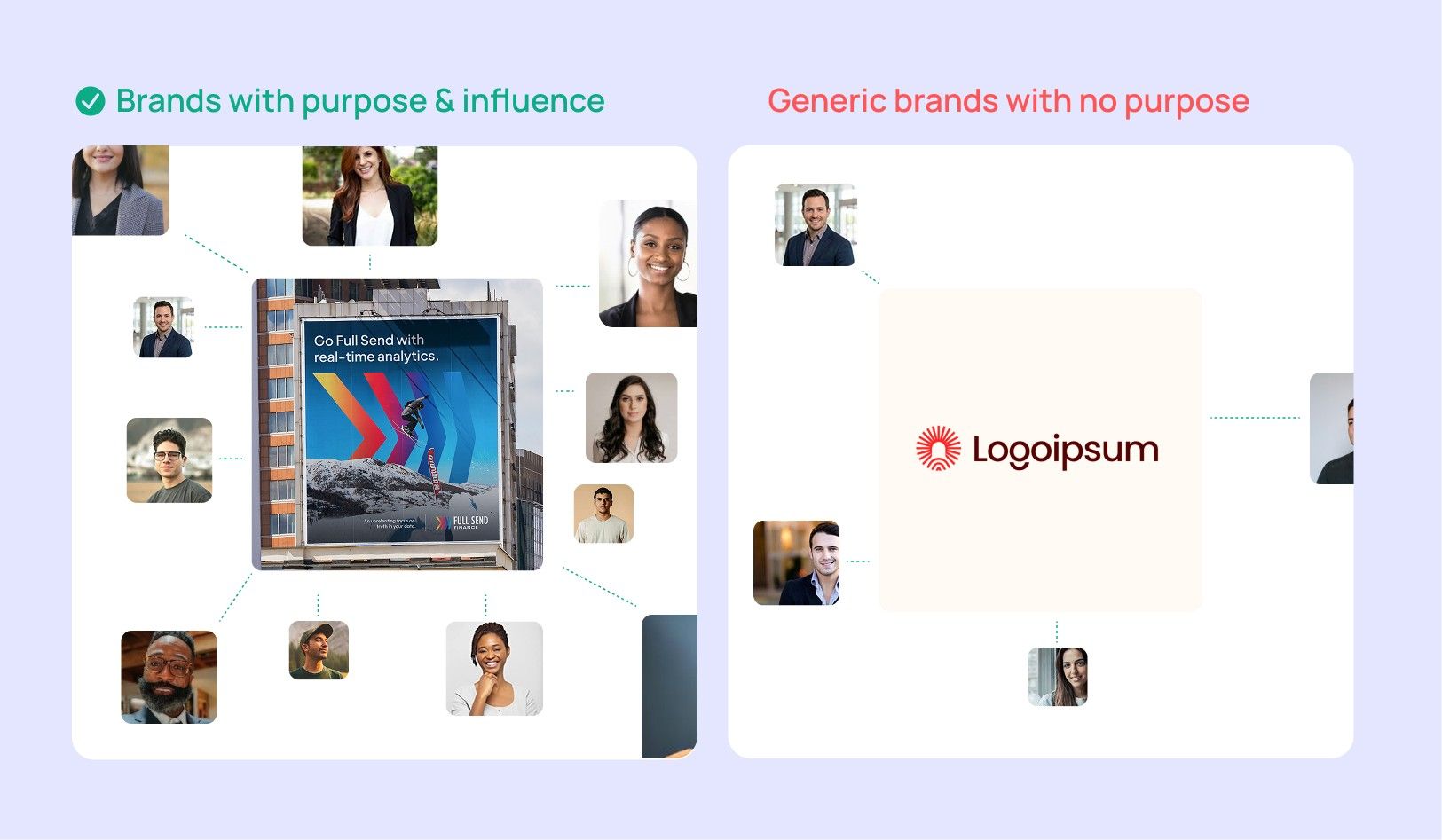
Before a candidate ever accepts an offer, your brand has already made an argument. It's made it through your website, your LinkedIn presence, the way people in your industry talk about you, and whether anyone talks about you at all.
A strong brand acts as a gravity well that pulls high-caliber candidates toward you before you even post a new role. They know your name. They resonate with what you stand for. They've formed a perception of what working there means for their own career.
A weak brand does the opposite. It creates friction at every stage of the recruiting process that no job description can overcome. Top-tier candidates have options, and they use their perception of your brand to filter those options before they ever read a single bullet point. A generic website, an inconsistent LinkedIn presence, and a name that doesn't register in your industry don't just fail to attract great people — they actively screen them out.
The multiplier here is straightforward: your current brand is either acting as an attractive magnetic force or a repulsive one for top tier talent
Multiplier 2: Talent Retention
Attracting great people and keeping them are two separate problems, but they often share some of the same root causes.
Talented people do not stay at companies they are not proud of and believe in. That pride is not purely about culture or compensation — it's about whether the brand they are attached to every day reflects the quality of the work they are actually doing. When your brand looks generic, inconsistent, or beneath the caliber of your product/service, your best people feel the gap. And eventually, they find somewhere that closes it.
A brand people believe in creates internal conviction every day they show up to work. That conviction shows up in every team meeting, every sales call, and every piece of content that leaves the building.
Multiplier 3: Price Justification
Commodity brands compete on price because they have no other argument. When nothing about your visual identity, your positioning, or your digital presence signals that you are worth more than the next option, the buyer defaults to the one lever they can actually compare: cost.
Brand creates perceived value that allows you to charge a premium on your existing offerings. Your customers are now not just buying a product or service — they are also buying your brand.
We've seen this pattern directly with clients. A company wraps up a rebrand. The product doesn't change. Operations don't change. The pricing changes — not because someone decided to raise rates, but because the brand now supports conversations with buyers who have bigger budgets. Prospects stop pushing back on price and start asking about scope.
Without it, every pricing conversation is a commodity negotiation. With it, price becomes one signal among many, and usually not the loudest one.
Multiplier 4: Sales and Marketing Effectiveness
Brand is the coefficient on every dollar you spend in marketing and every hour your sales team puts in. The budget doesn't change. The activity doesn't change. What changes with a strong brand is the return on that activity — and it works through two distinct mechanisms.
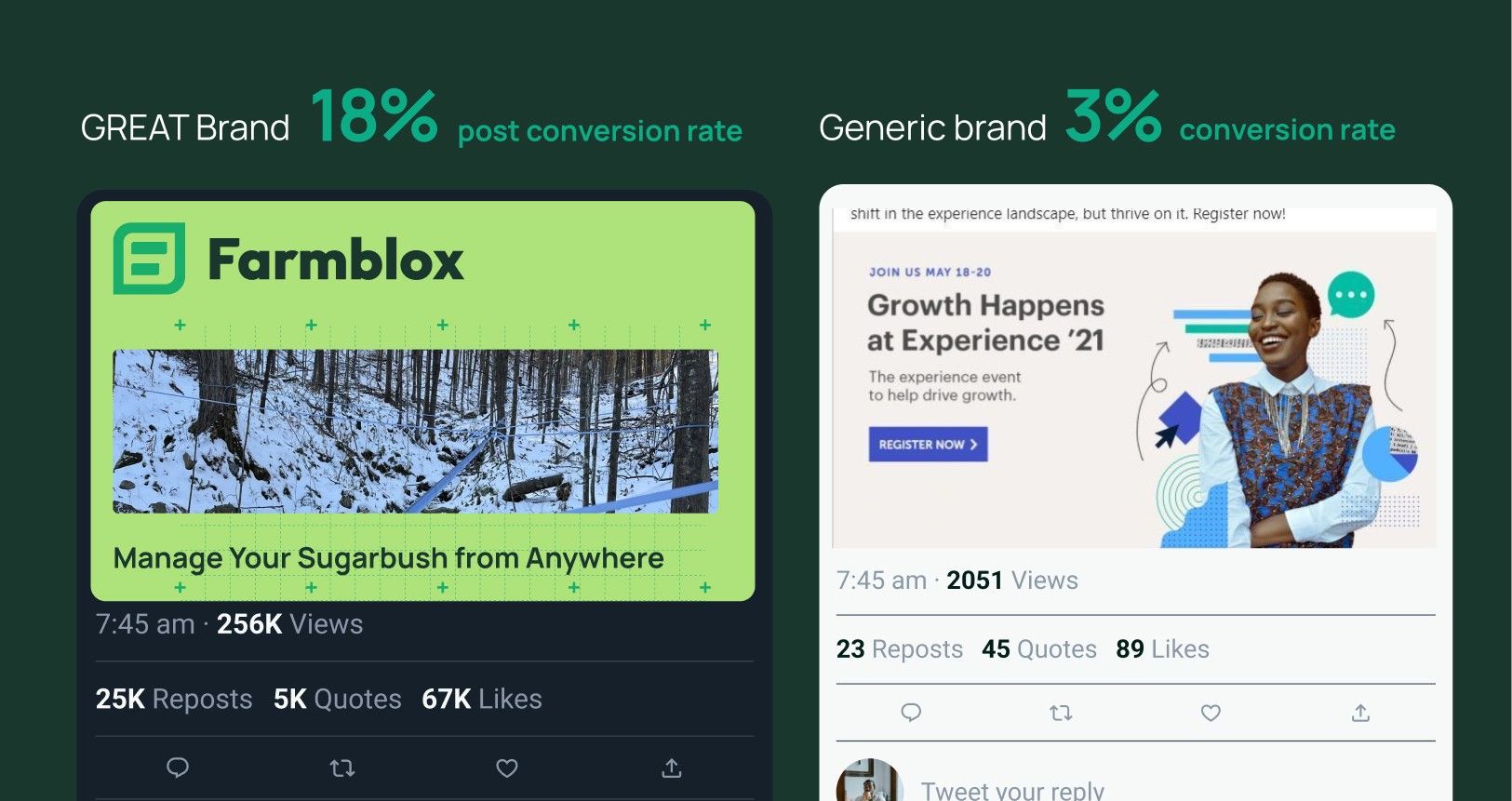
The first is pipeline volume. Two companies with identical ad budgets, identical audiences, and identical offers will not generate identical leads if one brand is recognizable and the other is not. Recall matters. Trust matters. The brand that a prospect resonates with converts at a higher rate than the one that doesn't pass the "judge a book by its cover" test. Your marketing spend goes further because more of it lands.
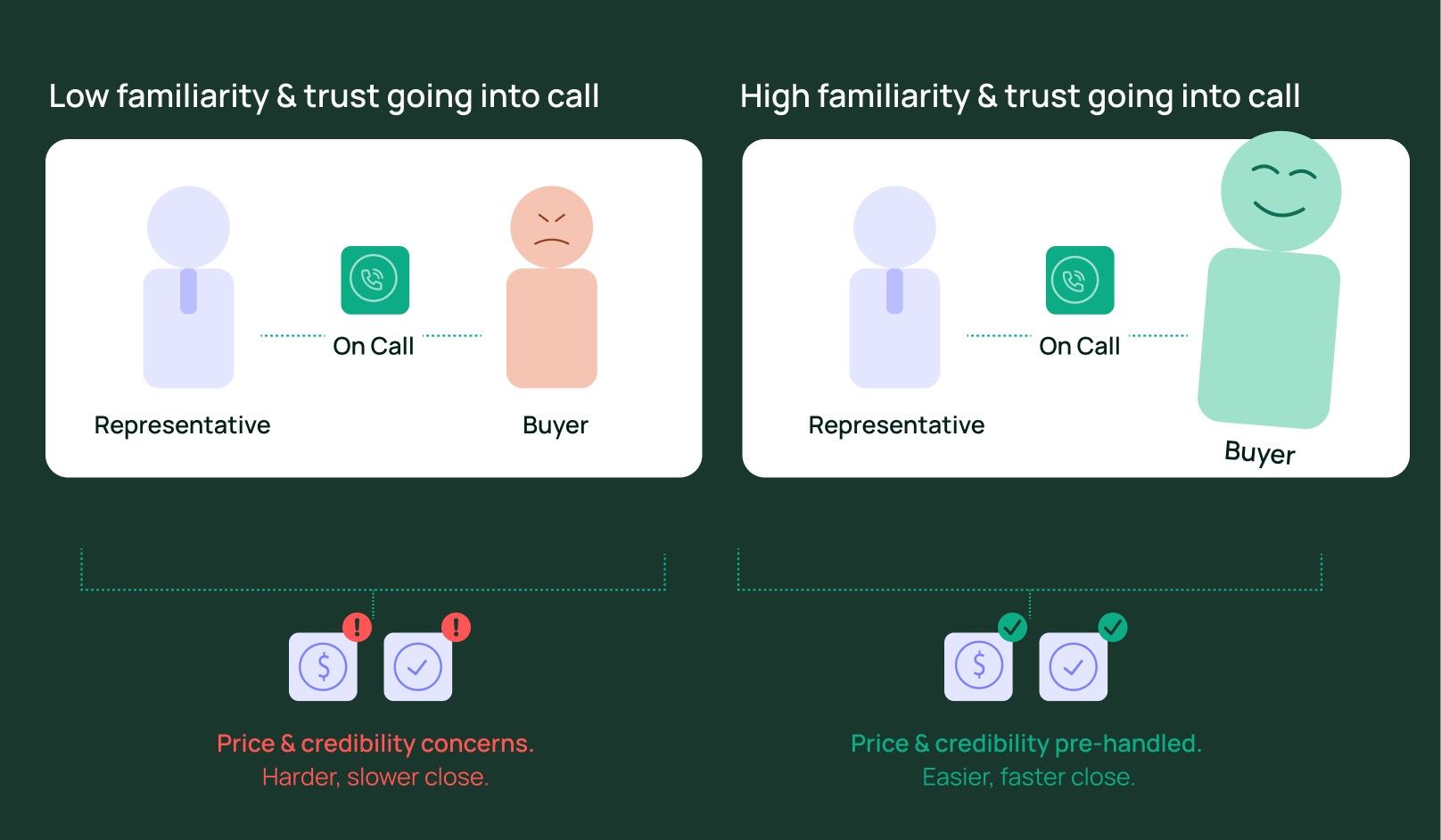
The second is close rate. By the time a qualified prospect gets on a call with your rep, a strong brand has already done the first half of the work. They have encountered your content, recognized your visual identity, and built a level of familiarity that makes the rep's job meaningfully easier. The sales cycle is shorter. The objections are fewer. The close rate is higher — not because the rep got better, but because the brand reduced the friction before the conversation started.
These two effects are independent and they compound. More leads entering the funnel at a higher close rate means the same team produces materially different revenue. A strong brand multiplies the output of the same marketing and sales budget.
How to Think About The Value of a Strong Brand
Flip every vector above and you get a clear picture of what a weak brand could cost you.
You are not attracting top-tier candidates — you are settling for whoever the compensation package can close. You are not retaining believers — you are bleeding the ones who have options to competitors with stronger stories. You are not commanding a premium — you are defending your price in every deal. You are not growing your pipeline or improving your close rate — you are subsidizing the inefficiency of a brand that makes everyone's job harder.
None of this shows up as a line item which can make it very tricky to understand what to value a new rebrand at. It shows up as a sales cycle that is two weeks longer than it should be. A recruiting close rate that requires signing bonuses to hit. A marketing CPL that is quietly 40% higher than your competitors. A pricing ceiling that your team has quietly accepted as fixed. Leads that convert at half the rate they should.
If you're struggling in any of these areas, we built a free calculator that lets you plug in your own numbers — leads, close rate, price point — and see what a rebrand could actually mean for your revenue over five years. Get it here: https://docs.google.com/spreadsheets/d/16MC5wYRJpFU7j8m8xMtL9HXHU0DbuKYRRlBSb9D7Lpc/copy
This article was first published on LinkedIn.

